
How Starlink Took Over Space 🛰️
August 05, 2026 — ny_wk
As an Amazon Associate I earn from qualifying purchases.
August 05, 2026 — ny_wk
Disclosure: some links above are affiliate links — if you buy through them I may earn a small commission at no extra cost to you. Thanks for supporting the channel!
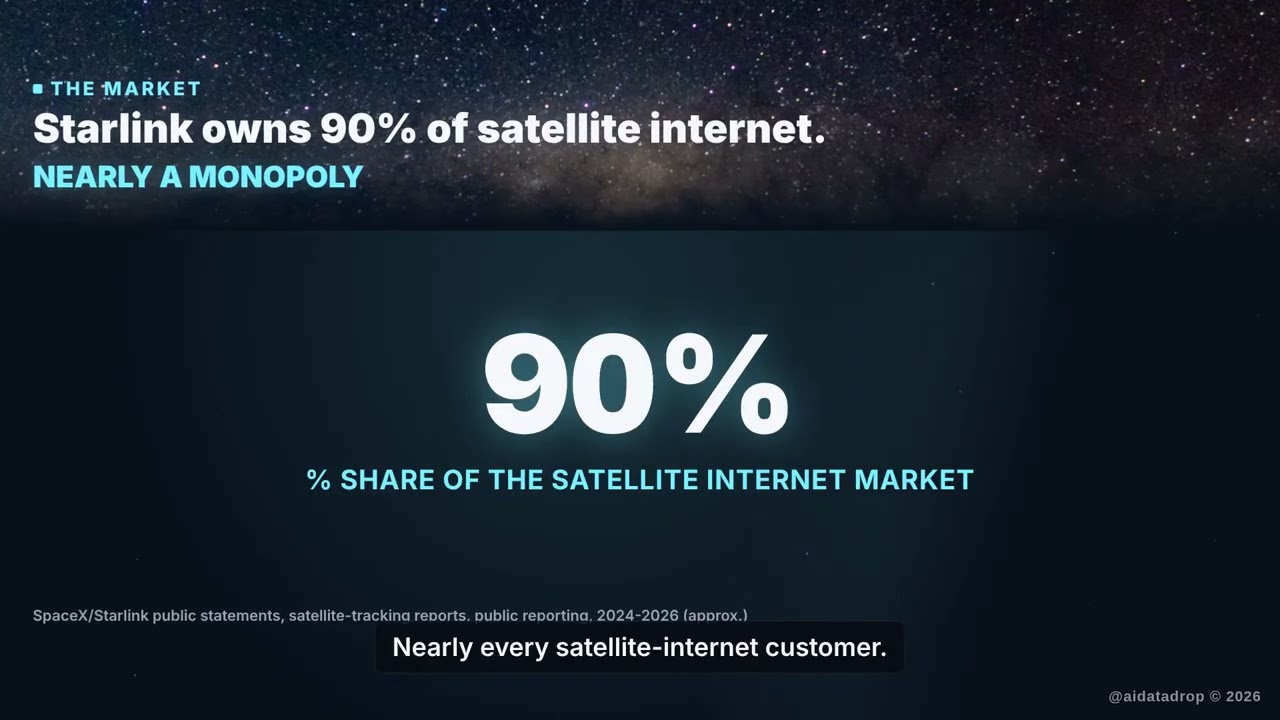
In a mere handful of years, Starlink has ascended from an ambitious concept to the undisputed leader in satellite internet, profoundly reshaping how the world connects. By blanketing the globe with its sprawling low Earth orbit (LEO) satellite constellation, SpaceX's Starlink has truly taken over space, delivering high-speed, low-latency broadband to even the most remote corners of our planet and redefining what’s possible for global connectivity.
For decades, reliable, high-speed internet remained an elusive dream for billions. Vast swathes of rural areas, remote communities, maritime vessels, and even entire nations struggled with glacial speeds, exorbitant costs, or simply no connectivity at all. Traditional solutions like fiber optic cables were too expensive and complex to lay in sparsely populated regions, while geostationary (GEO) satellite internet, though wide-reaching, suffered from crippling latency due to the immense distance its signals had to travel – often over 22,000 miles to space and back. This created a profound digital divide, limiting access to education, healthcare, commerce, and global communication for millions.
Enter Starlink, SpaceX’s audacious answer to this global problem. Spearheaded by Elon Musk, the vision was elegantly simple yet extraordinarily complex: deploy a massive constellation of satellites in low Earth orbit, just a few hundred miles above the surface, to dramatically reduce signal latency and provide fiber-like speeds from space. This wasn't just another satellite internet provider; it was a fundamental re-imagining of global infrastructure, leveraging SpaceX's expertise in reusable rocket technology and efficient satellite manufacturing.
The urgency for such a solution has never been greater. In an increasingly interconnected world, internet access is no longer a luxury but a fundamental necessity. The COVID-19 pandemic further highlighted this, as remote work, online learning, and telemedicine became widespread, leaving those without robust internet severely disadvantaged. Starlink arrived at precisely the right moment, offering a pragmatic, scalable solution to bridge the chasm of connectivity that traditional infrastructure had failed to span. Its rapid deployment and immediate impact showcased not just technological prowess but a deep understanding of a critical global need. The sheer scale of its operations – launching thousands of satellites in rapid succession – has led to Starlink effectively "taking over" the near-Earth orbital environment, establishing an unprecedented dominance in the commercial satellite sector and providing a blueprint for the future of global broadband.
Starlink's success isn't just about a grand vision; it's rooted in groundbreaking engineering and an integrated technological ecosystem designed for unprecedented scale and performance. From the satellites themselves to the ground infrastructure and the launch systems, every component is optimized for delivering high-speed, low-latency internet globally.
At the heart of Starlink's dominance is its colossal LEO satellite constellation. Unlike traditional GEO satellites that operate individually at extremely high altitudes, Starlink deploys thousands of smaller, more agile satellites in orbits ranging from 340 to 370 miles (550 to 600 kilometers) above Earth. This proximity is critical: it drastically reduces the round-trip signal travel time, bringing latency down from hundreds of milliseconds to an average of 20-40 milliseconds – comparable to terrestrial fiber connections.
SpaceX has adopted an assembly-line approach to satellite manufacturing, producing them at a rate unheard of in the aerospace industry. Each Starlink satellite is a sophisticated piece of hardware, roughly the size of a table, weighing around 573 lbs (260 kg). They feature powerful phased array antennas to direct beams to user terminals on the ground, a single solar array for power, and efficient ion thrusters that use krypton or argon propellant for orbital maneuvering and collision avoidance. This latter point is crucial: each satellite can autonomously dodge potential collisions with other space objects, a vital safeguard given the burgeoning orbital environment.
The constellation operates in multiple orbital shells, carefully choreographed to ensure seamless handoffs between satellites as they traverse the sky. This intricate ballet of orbital mechanics guarantees continuous coverage for users on the ground, regardless of their location. The relentless pace of deployment, facilitated by SpaceX's reusable rockets, has seen Starlink quickly become the operator of the largest satellite constellation in history, fundamentally reshaping the orbital landscape and setting a new precedent for commercial space endeavors.
Connecting to this orbital web requires equally innovative ground infrastructure. The most recognizable component is the Starlink user terminal, affectionately dubbed "Dishy." This compact, self-aligning phased array antenna is a marvel of consumer-grade technology. Users simply plug it in, and the dish automatically finds and tracks the optimal satellites overhead, adapting its angle to maintain a strong signal. The phased array technology allows it to electronically steer its beam without any mechanical movement, making it robust and efficient. The indoor router then distributes the internet connection via Wi-Fi.
Supporting the user terminals are Starlink's global network of gateway stations. These ground stations are strategically positioned to connect the LEO satellites to the existing fiber optic internet backbone. They serve as the critical link, receiving data from the satellites and injecting it into the terrestrial internet, and vice-versa. As the constellation has grown, Starlink has increasingly implemented inter-satellite laser links on its newer V1.5 and V2 mini satellites. These laser links allow satellites to communicate directly with each other in orbit, bypassing the need for a ground gateway station within every service area. This capability dramatically reduces latency for long-distance connections and enables Starlink to provide services over oceans and in remote polar regions where ground stations are impractical or impossible. It's a key technological leap towards true global, low-latency coverage, making the network more resilient and efficient.
None of Starlink's rapid expansion would be possible without SpaceX's revolutionary launch capabilities, primarily the Falcon 9 rocket. The Falcon 9's reusability is the cornerstone of Starlink's deployment strategy. By landing and re-flying its first-stage boosters multiple times, SpaceX has dramatically driven down the cost of launching payloads into orbit. This cost efficiency, combined with the Falcon 9's reliability and ability to deploy large batches of satellites (typically 20-60 per launch), has enabled Starlink to build out its constellation at an unprecedented pace.
Each Falcon 9 launch carrying Starlink satellites is a spectacle of modern engineering, demonstrating the power of iterative design and reusability. The ability to conduct multiple launches per month has allowed Starlink to outpace all competitors in terms of satellite numbers and global reach. Looking ahead, the much larger Starship launch system is poised to revolutionize Starlink deployment even further, promising to ferry hundreds of the next-generation V2 satellites, which are larger and more capable, into orbit with each flight. This technological synergy between launch services and satellite deployment is unique to SpaceX, providing an insurmountable competitive advantage in the race to dominate space-based internet.
The ramifications of Starlink's operational success extend far beyond simply providing faster internet. It's reshaping geopolitics, enabling new industries, and challenging existing infrastructure, all while navigating a complex web of technical, environmental, and regulatory hurdles.
Starlink's most immediate and profound impact is on bridging the global digital divide. Millions in rural and underserved areas, previously reliant on slow DSL, unreliable fixed wireless, or expensive, high-latency GEO satellite options, now have access to robust, high-speed broadband. This transformation empowers remote learning, facilitates telehealth services, enables small businesses to thrive online, and connects families across vast distances. The economic and social uplift potential for these communities is immense, fostering greater equity in access to the digital economy.
Beyond individual homes, Starlink has proven invaluable in critical applications. Its mobility and rapid deployability have made it a lifeline in disaster zones and conflict areas. Perhaps the most prominent example is its deployment in Ukraine, where it provided crucial communication infrastructure after traditional networks were damaged or destroyed. This demonstrated its resilience and strategic importance as a non-terrestrial communication backbone. Furthermore, Starlink is increasingly adopted by maritime industries (Starlink Maritime), airlines (Starlink Aviation), and even RV and mobile users (Starlink Roam), providing connectivity where no traditional infrastructure exists. Its ability to deliver consistent, high-bandwidth service in such diverse and demanding environments underscores its technological superiority and versatility, cementing its role in revolutionizing global connectivity across all sectors.
With thousands of satellites already in orbit and many more planned, Starlink's rapid expansion has understandably raised significant concerns among astronomers and space agencies. One major issue is light pollution. Starlink satellites, particularly older generations, can appear as bright streaks in long-exposure astronomical photographs, interfering with scientific observations and hindering efforts to study the cosmos. SpaceX has responded by implementing design changes, such as visors (DarkSat/VisorSat) and reflective coatings, to reduce their albedo and brightness, but the sheer number of objects remains a challenge for ground-based astronomy.
A more pressing concern for the long-term sustainability of space is space debris. While Starlink satellites are equipped with autonomous collision avoidance systems and are designed to deorbit safely at the end of their operational life (typically within five years), the sheer volume of objects significantly increases the risk of orbital collisions. A single major collision could create thousands of new pieces of debris, potentially triggering a cascade effect known as the Kessler Syndrome, rendering certain orbital paths unusable. International bodies and regulators are grappling with how to manage this increasingly crowded environment, with Starlink at the forefront of the debate regarding sustainable space practices and responsible constellation deployment. SpaceX's commitment to active deorbiting and autonomous collision avoidance is a step, but the regulatory framework for such large constellations is still evolving.
Despite its technological marvels, Starlink faces a complex economic landscape. The initial hardware cost for the user terminal has been a significant barrier for some, though prices have fluctuated and seen some reductions over time. The monthly subscription fee, while competitive for high-speed rural internet, positions Starlink as a premium service rather than a universal low-cost solution. This strategic pricing reflects the immense investment in development, manufacturing, and launch operations.
The competitive landscape is also heating up. Companies like OneWeb, backed by British government and Bharti Global, have launched their own LEO constellations, focusing primarily on business and government contracts. Amazon's Project Kuiper is another formidable challenger, promising to deploy over 3,200 satellites and leveraging Amazon's vast cloud infrastructure and consumer reach. These competitors, while behind in deployment, have deep pockets and unique advantages that could influence Starlink's market share and pricing strategies in the coming years. Starlink's long-term sustainability hinges on continuing to innovate, achieving greater economies of scale, and expanding its service offerings to maintain its competitive edge in a rapidly evolving market.
Starlink’s journey is far from over. With ambitious plans for further expansion and technological advancements, it continues to define the cutting edge of the New Space era, promising even more transformative capabilities.
The future of Starlink deployment is inextricably linked to the success of SpaceX's next-generation launch vehicle, Starship. Currently under development and testing, Starship is designed to be fully and rapidly reusable, capable of delivering unprecedented payloads to orbit. Unlike the Falcon 9, which can deploy dozens of smaller Starlink V1.0 or V1.5 satellites, Starship is intended to carry hundreds of the larger, more advanced Starlink V2.0 satellites in a single launch. These V2 satellites are significantly larger and more capable, featuring more powerful phased array antennas, improved inter-satellite laser links, and potentially even direct-to-cell phone broadcast capabilities.
The sheer capacity and reduced per-kilogram launch cost of Starship promise to accelerate the completion of Starlink’s planned constellation to an extent unimaginable with conventional rockets. This will not only expand coverage to truly global levels but also enhance network capacity and resilience, further solidifying Starlink's dominance. Starship represents a paradigm shift in space logistics, and Starlink is poised to be its primary beneficiary, unlocking a new era of rapid, large-scale orbital infrastructure deployment.
Starlink is continuously evolving its technology and expanding its service portfolio. Beyond increased speeds and reduced latency for existing users, several groundbreaking capabilities are on the horizon. The most anticipated is direct-to-cell phone connectivity, enabling ordinary smartphones to connect directly to Starlink satellites for basic text messaging, voice calls, and eventually even data, without the need for specialized hardware. This technology could eliminate dead zones entirely, providing ubiquitous connectivity even in the most remote terrestrial locations, challenging traditional cellular network models.
Further improvements in satellite design will likely lead to even higher bandwidth and lower latency, supporting more demanding applications such as augmented reality, virtual reality, and advanced IoT solutions from space. The network is also expected to become more robust and resilient, with advanced beamforming and routing algorithms dynamically optimizing performance. As the constellation matures, Starlink will continue to tailor its offerings for diverse sectors, from enterprise solutions requiring guaranteed uptime to emergency services demanding immediate, reliable communication, pushing the boundaries of what satellite internet can achieve.
The presence of a private, globally accessible satellite internet constellation like Starlink has profound geopolitical and strategic implications. It represents a powerful dual-use technology, serving both civilian and potentially military purposes. Its proven resilience in conflict zones highlights its value as a decentralized, difficult-to-disrupt communication system, offering a strategic advantage to nations and organizations that can leverage it.
This also raises questions about digital sovereignty and the control of information. As Starlink becomes a critical infrastructure provider for numerous countries, the interplay between national regulations, international space law, and the policies of a private company will become increasingly complex. The ability to bypass traditional internet censorship or provide connectivity to populations under duress presents both opportunities and challenges for governments worldwide. Starlink is not just a commercial venture; it is a significant player in the global information ecosystem, influencing how states interact, how conflicts are fought, and how human rights to information are upheld in the digital age. Its presence marks a new chapter in the geopolitics of space, where private entities wield unprecedented influence over critical global infrastructure.
Starlink is a satellite internet constellation operated by SpaceX, designed to provide high-speed, low-latency broadband internet access globally, especially in rural and underserved areas. It uses thousands of small satellites in low Earth orbit (LEO) to deliver internet directly to user terminals on the ground.
Starlink works by deploying a constellation of satellites in low Earth orbit, orbiting much closer to Earth than traditional geostationary satellites. These satellites communicate with user terminals ("Dishy") on the ground and with a network of gateway stations that connect to the terrestrial internet backbone. Newer satellites also use inter-satellite laser links to communicate directly with each other, reducing reliance on ground stations and improving global coverage and latency.
While Starlink offers impressive speeds and significantly lower latency than previous satellite internet, it generally does not outperform terrestrial fiber optic internet. Fiber typically provides higher speeds, even lower latency, and greater reliability in areas where it's available. Starlink's primary advantage is providing high-quality internet access in regions where fiber optic or other high-speed terrestrial options are unavailable or impractical.
Starlink faces several key challenges, including managing the increasing risk of space debris in low Earth orbit, mitigating light pollution effects on ground-based astronomy, navigating complex international regulatory frameworks, maintaining cost-effectiveness for both deployment and subscriber services amidst rising competition from other LEO broadband providers like OneWeb and Project Kuiper, and ensuring long-term sustainability of its vast constellation.
Want to dive deeper into the data and see the full scope of Starlink's incredible journey? Watch the comprehensive video on @aidatadrop and subscribe for more fascinating insights into the world of technology and space!