China's Rare Earth Chokehold, Explained 🌍
July 27, 2026 — ny_wk
As an Amazon Associate I earn from qualifying purchases.
As an Amazon Associate I earn from qualifying purchases.
As an Amazon Associate I earn from qualifying purchases.
As an Amazon Associate I earn from qualifying purchases.
As an Amazon Associate I earn from qualifying purchases.
As an Amazon Associate I earn from qualifying purchases.
As an Amazon Associate I earn from qualifying purchases.
As an Amazon Associate I earn from qualifying purchases.
As an Amazon Associate I earn from qualifying purchases.
As an Amazon Associate I earn from qualifying purchases.
As an Amazon Associate I earn from qualifying purchases.
As an Amazon Associate I earn from qualifying purchases.
As an Amazon Associate I earn from qualifying purchases.
As an Amazon Associate I earn from qualifying purchases.
As an Amazon Associate I earn from qualifying purchases.
As an Amazon Associate I earn from qualifying purchases.
As an Amazon Associate I earn from qualifying purchases.
As an Amazon Associate I earn from qualifying purchases.
As an Amazon Associate I earn from qualifying purchases.
As an Amazon Associate I earn from qualifying purchases.
As an Amazon Associate I earn from qualifying purchases.
As an Amazon Associate I earn from qualifying purchases.
As an Amazon Associate I earn from qualifying purchases.
As an Amazon Associate I earn from qualifying purchases.
As an Amazon Associate I earn from qualifying purchases.
As an Amazon Associate I earn from qualifying purchases.
As an Amazon Associate I earn from qualifying purchases.
As an Amazon Associate I earn from qualifying purchases.
As an Amazon Associate I earn from qualifying purchases.
As an Amazon Associate I earn from qualifying purchases.
As an Amazon Associate I earn from qualifying purchases.
As an Amazon Associate I earn from qualifying purchases.
As an Amazon Associate I earn from qualifying purchases.
As an Amazon Associate I earn from qualifying purchases.
As an Amazon Associate I earn from qualifying purchases.
As an Amazon Associate I earn from qualifying purchases.
As an Amazon Associate I earn from qualifying purchases.
As an Amazon Associate I earn from qualifying purchases.
As an Amazon Associate I earn from qualifying purchases.
As an Amazon Associate I earn from qualifying purchases.
As an Amazon Associate I earn from qualifying purchases.
As an Amazon Associate I earn from qualifying purchases.
As an Amazon Associate I earn from qualifying purchases.
As an Amazon Associate I earn from qualifying purchases.
As an Amazon Associate I earn from qualifying purchases.
As an Amazon Associate I earn from qualifying purchases.
As an Amazon Associate I earn from qualifying purchases.
As an Amazon Associate I earn from qualifying purchases.
As an Amazon Associate I earn from qualifying purchases.
As an Amazon Associate I earn from qualifying purchases.
As an Amazon Associate I earn from qualifying purchases.
As an Amazon Associate I earn from qualifying purchases.
As an Amazon Associate I earn from qualifying purchases.
As an Amazon Associate I earn from qualifying purchases.
As an Amazon Associate I earn from qualifying purchases.
As an Amazon Associate I earn from qualifying purchases.
As an Amazon Associate I earn from qualifying purchases.
As an Amazon Associate I earn from qualifying purchases.
As an Amazon Associate I earn from qualifying purchases.
As an Amazon Associate I earn from qualifying purchases.
As an Amazon Associate I earn from qualifying purchases.
As an Amazon Associate I earn from qualifying purchases.
As an Amazon Associate I earn from qualifying purchases.
As an Amazon Associate I earn from qualifying purchases.
As an Amazon Associate I earn from qualifying purchases.
As an Amazon Associate I earn from qualifying purchases.
As an Amazon Associate I earn from qualifying purchases.
As an Amazon Associate I earn from qualifying purchases.
As an Amazon Associate I earn from qualifying purchases.
As an Amazon Associate I earn from qualifying purchases.
🛒 Recommended gear on AmazonDisclosure: some links above are affiliate links — if you buy through them I may earn a small commission at no extra cost to you. Thanks for supporting the channel!
The world's reliance on China's rare earth chokehold has become one of the most pressing geopolitical and economic vulnerabilities of our time, impacting everything from smartphones to fighter jets. These 17 obscure elements are indispensable for modern technology, making their supply chain a linchpin of global innovation and national security.
Welcome to the invisible battleground of modern geopolitics, where the fate of our tech-driven future hinges on a group of metals most people have never heard of: rare earth elements (REEs). From the glowing screens of our smartphones to the precision-guided missiles defending our nations, these 17 chemically similar elements are the unsung heroes of the 21st century. Yet, a singular, dominant force controls an overwhelming majority of their extraction and, crucially, their processing: China. This isn't just an economic footnote; it's a strategic chokehold, threatening to derail global supply chains, stymie technological advancement, and redefine geopolitical power dynamics. Understanding China's rare earth chokehold is not merely an academic exercise; it's essential for comprehending the silent struggle for technological independence and economic sovereignty playing out on the global stage right now.
The Unseen Power: What Are Rare Earths and Why Do They Matter?
Despite their name, rare earth elements aren't particularly rare in the Earth's crust; some are more abundant than gold or silver. The "rare" designation stems from the difficulty and cost of extracting them in commercially viable concentrations and separating them from each other, as they tend to be widely dispersed. The 17 elements comprise scandium (Sc), yttrium (Y), and the 15 lanthanides (lanthanum to lutetium). Each possesses unique magnetic, luminescent, and electrochemical properties that make them irreplaceable in a vast array of high-tech applications.
The Lifeblood of Modern Technology
The sheer ubiquity of rare earth elements in contemporary life is astonishing. They are the secret sauce behind:
- Consumer Electronics: From the vibrant colors of your LED and LCD screens (europium, yttrium, terbium) to the haptic feedback in your phone (neodymium, dysprosium for magnets), REEs are everywhere.
- Renewable Energy: The powerful magnets in wind turbines and electric vehicle (EV) motors (neodymium, praseodymium, dysprosium, terbium) are quintessential rare earth applications, critical for the global transition to green energy.
- Defense and Aerospace: Stealth technology, missile guidance systems, lasers, and sophisticated radar depend heavily on REEs, making them vital for national security.
- Medical Devices: MRI scanners, X-ray machines, and even some cancer treatments utilize these elements for their unique properties.
- Catalytic Converters: Cerium, for instance, is crucial for reducing harmful emissions in automotive exhaust systems.
- Advanced Manufacturing: Polishing compounds, specialized alloys, and even certain types of glass rely on REEs.
Without a consistent and secure supply of these materials, critical industries worldwide would grind to a halt. The ongoing technological revolution—from artificial intelligence to quantum computing—is fundamentally underpinned by these often-overlooked elements.
How China Cornered the Market: A Geopolitical Masterstroke
China's journey to becoming the undisputed superpower of rare earth elements is a complex tale involving strategic foresight, economic policies, environmental costs, and state-backed consolidation. For decades, the global supply chain was relatively diversified, with the United States, for instance, being a significant producer. However, a confluence of factors allowed China to systematically build its dominance.
A Deliberate Strategy and Environmental Sacrifice
Beginning in the 1980s, China identified rare earths as a strategic national asset. Deng Xiaoping famously declared in 1992, "The Middle East has oil, China has rare earths." This vision laid the groundwork for a sustained, state-backed effort to develop its rare earth industry.
- Abundant Reserves: China possesses some of the largest and most easily extractable rare earth deposits, particularly in Inner Mongolia (Bayan Obo mine) for light rare earths, and in southern provinces for heavy rare earths, which are typically more valuable and difficult to mine.
- Lower Production Costs: A combination of cheaper labor, less stringent environmental regulations, and a willingness to absorb the ecological damage associated with rare earth mining and processing gave China a significant cost advantage. Western nations, faced with rising environmental awareness and stricter regulations, found it increasingly difficult and expensive to compete.
- Technological Investment: China invested heavily in the research and development of extraction and processing technologies, rapidly developing expertise that Western nations were increasingly letting lapse.
- Export Incentives and Subsidies: The Chinese government provided significant subsidies and tax breaks to its domestic rare earth companies, further lowering their costs and enabling them to undercut international competitors.
The Consolidation and the "Chokehold"
By the early 2000s, China's market share grew dramatically. This dominance became a "chokehold" during critical periods:
- 2010 Export Quotas: Following a dispute with Japan over fishing rights, China drastically cut its rare earth export quotas. This move sent shockwaves through global markets, demonstrating Beijing's willingness to weaponize its rare earth dominance. Prices skyrocketed, prompting a frantic scramble by nations to secure alternative supplies and restart dormant mining operations.
- Industry Consolidation: The Chinese government has actively consolidated its fragmented rare earth industry into a few state-owned behemoths. This centralization provides Beijing with greater control over production, pricing, and export policies, enhancing its strategic leverage.
- Processing Prowess: Even if other countries mine rare earths, the vast majority of processing capacity—turning raw ore into usable metals, alloys, and magnets—resides in China. This is a crucial distinction. Mining is one thing; the complex, environmentally intensive chemical separation and refining is another, and China has perfected it. Without this processing, raw rare earth minerals are largely useless to high-tech industries.
This deliberate, long-term strategy has resulted in a situation where China accounts for over 60% of global rare earth mining and an even higher percentage (around 85-90%) of processing and manufacturing of rare earth magnets. This asymmetric dependence creates immense vulnerability for any nation that relies on modern technology.
The Global Repercussions of a Single Point of Failure
The concentration of rare earth element supply and processing in China represents a profound single point of failure for the global economy and security infrastructure. The implications extend far beyond mere trade imbalances, touching upon national security, economic stability, and the pace of technological innovation.
Supply Chain Vulnerability and Economic Risk
Any disruption to China's rare earth supply can have immediate and severe consequences. Whether due to political tensions, trade disputes, or even unforeseen events like natural disasters, a supply interruption could:
- Crippling Manufacturing: Industries reliant on REEs, from automotive (especially EVs) to aerospace, would face severe shortages, driving up costs, delaying production, and potentially forcing shutdowns.
- Exacerbated Inflation: Scarce materials mean higher prices, which would inevitably be passed on to consumers, further fueling inflation in an already turbulent global economy.
- Innovation Stalled: Research and development into next-generation technologies heavily depend on access to these materials. A limited or uncertain supply could slow down or even halt critical advancements.
The lessons from the 2010 rare earth export quotas demonstrated how quickly this vulnerability can be exploited, forcing global industries to scramble and re-evaluate their fundamental operating assumptions. The broader critical minerals landscape shares similar risks, but rare earths stand out due to their specific applications and extreme concentration of control.
National Security and Geopolitical Leverage
For defense industries, secure access to rare earth elements is non-negotiable. Modern military hardware, from F-35 fighter jets to precision-guided munitions and sophisticated radar systems, relies on these materials for their advanced capabilities.
- Weaponizing Supply: In a geopolitical conflict or a serious trade dispute, China could restrict rare earth exports, effectively hindering the manufacturing of essential defense systems for rival nations. This creates an asymmetric advantage and immense diplomatic leverage.
- Strategic Dependence: Nations that champion democratic values and open markets find themselves strategically dependent on a geopolitical rival for materials critical to their defense and economic future. This fundamental paradox creates significant friction and motivates diversification efforts.
- Technological Espionage: The drive for rare earth independence also intersects with concerns about intellectual property theft and technological espionage, as nations seek to replicate China's processing know-how.
The current geopolitical climate, marked by increasing tensions between major powers, only amplifies these concerns, turning the seemingly obscure world of rare earth mining into a flashpoint for international relations.
The Quest for Diversification: Can the World Break Free?
Recognizing the profound risks posed by China's rare earth chokehold, numerous nations and blocs have launched ambitious initiatives to diversify the global supply chain. This quest for independence is a monumental undertaking, fraught with economic, environmental, and technological challenges.
Restarting Mining and Processing Outside China
The primary thrust of diversification efforts involves reactivating or establishing new mining and processing operations in other parts of the world.
- United States: The U.S. has significant rare earth deposits, particularly at the Mountain Pass mine in California. Once a dominant global player, it ceased operations for a period before restarting. However, while Mountain Pass mines a substantial amount of rare earth concentrate, it still largely relies on China for processing the heaviest and most valuable elements. The U.S. government has invested in domestic processing capabilities and magnet manufacturing to close this critical gap.
- Australia: Australia is another major rare earth miner, with companies like Lynas Rare Earths operating significant mines (e.g., Mount Weld) and processing facilities (e.g., in Malaysia, with plans for more in Australia). They are a crucial non-Chinese supplier, particularly for light rare earths.
- Europe: The EU has identified rare earths as critical raw materials and is investing in exploration, mining, and processing projects within its borders and with international partners, including a significant discovery in Sweden (Kiruna).
- Other Nations: Countries like Vietnam, Myanmar, Brazil, India, and various African nations also possess rare earth deposits, and there is growing interest and investment in developing these resources.
However, simply mining the ore is not enough. The highly complex, energy-intensive, and environmentally demanding process of separating, refining, and manufacturing rare earth metals and magnets is where the true bottleneck lies. Decades of underinvestment outside China have left a massive gap in expertise and infrastructure.
Challenges and Roadblocks to Independence
Breaking China's rare earth chokehold is easier said than done, facing formidable hurdles:
- Environmental Concerns: Rare earth mining and processing are notoriously polluting, generating vast quantities of toxic wastewater and radioactive byproducts. Western nations face much stricter environmental regulations and public opposition, driving up costs and project timelines.
- Capital Investment: Establishing new mines, and especially new processing plants, requires enormous upfront capital investment, often billions of dollars, with long lead times before profitability.
- Cost Competitiveness: Even with modern, environmentally sound practices, non-Chinese rare earth producers often struggle to compete on price with Chinese firms, which benefit from decades of established infrastructure, lower environmental compliance costs, and state support.
- Technical Expertise: The specialized knowledge and skilled workforce required for rare earth separation and magnet manufacturing have largely migrated to China. Rebuilding this human capital and institutional knowledge takes time.
- Heavy vs. Light Rare Earths: While light rare earths are more abundant, heavy rare earths (like dysprosium and terbium, crucial for high-temperature magnets) are scarcer and often more concentrated in ion-adsorption clay deposits, which China predominantly mines. Diversifying heavy rare earth supply is particularly challenging.
Innovative Solutions and the Future Outlook
Beyond traditional mining, innovative approaches are gaining traction:
- Recycling: Urban mining—recovering rare earths from end-of-life products like electronics, EV batteries, and wind turbine magnets—offers a promising, less environmentally impactful source. However, current recycling technologies are still nascent and often uneconomical at scale.
- Alternative Materials: Research is ongoing to develop alternative materials or designs that reduce or eliminate the need for certain rare earths, particularly in magnets. While promising, a wholesale replacement for REEs in all applications is unlikely in the short to medium term.
- Strategic Reserves: Some nations are establishing strategic rare earth reserves, similar to oil reserves, to provide a buffer against supply disruptions.
- International Collaboration: Alliances between like-minded nations (e.g., US, Australia, Japan, EU) are crucial for pooling resources, sharing expertise, and collectively developing resilient supply chains.
The journey to untangle the world from China's rare earth chokehold is a marathon, not a sprint. It demands sustained political will, massive financial investment, technological innovation, and a fundamental shift in how nations approach critical mineral security. The stakes could not be higher, as the outcome will shape the global technological landscape and geopolitical balance for decades to come. The future of electric vehicles, renewable energy, and national defense is intertwined with these critical efforts.
Key Takeaways
- Rare earth elements are indispensable for modern technology: Used in everything from consumer electronics and EVs to defense systems, their unique properties are currently irreplaceable.
- China holds a dominant rare earth chokehold: Beijing controls over 60% of global rare earth mining and an estimated 85-90% of processing and magnet manufacturing, making it a single point of failure.
- This dominance is a deliberate strategic play: China leveraged abundant reserves, lower production costs, less stringent environmental regulations, and state-backed investment to corner the market over decades.
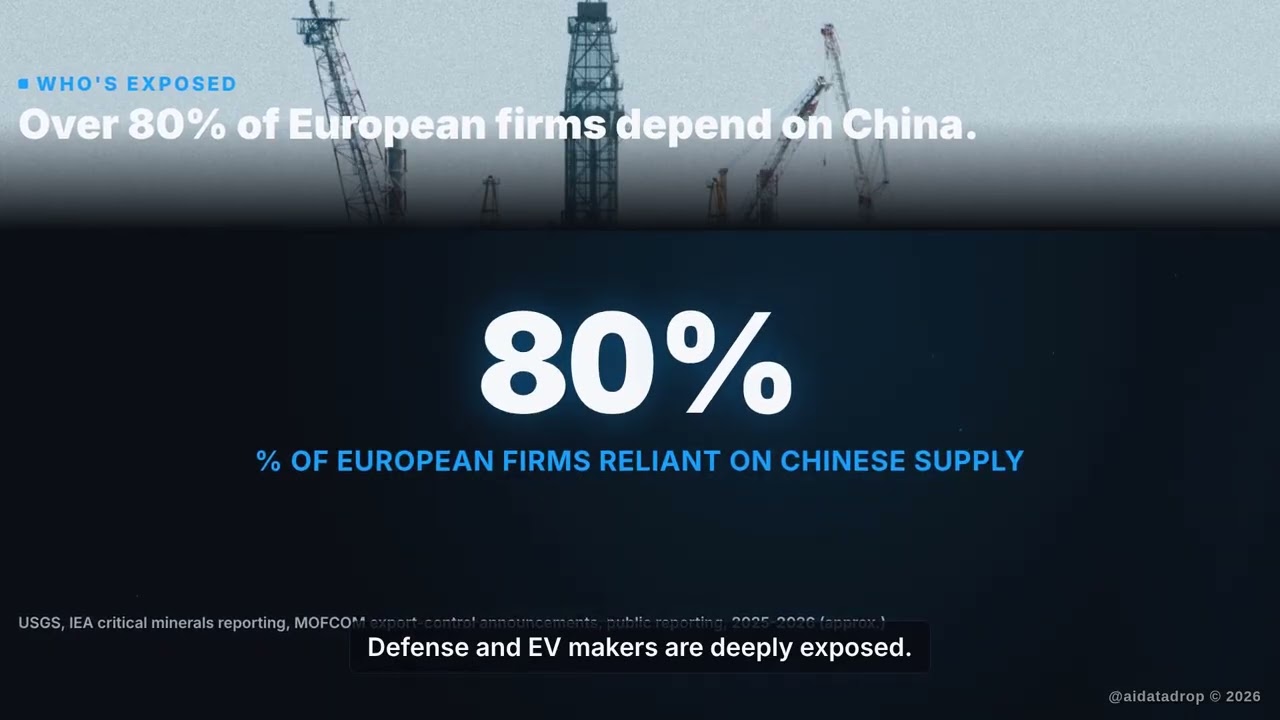
- The global implications are severe: This chokehold creates critical supply chain vulnerabilities, economic risks, and significant national security concerns for nations worldwide.
- Diversification efforts are underway but face hurdles: While countries like the US, Australia, and the EU are investing in new mining and processing capabilities, challenges include high costs, environmental impact, technical expertise gaps, and China's entrenched market position.
Frequently Asked Questions
What are rare earth elements, and why are they so important?
Rare earth elements (REEs) are a group of 17 metallic elements vital for virtually all modern high-tech applications, including electric vehicle motors, wind turbines, smartphones, missile guidance systems, and medical imaging. They possess unique magnetic, luminescent, and electrochemical properties that are currently irreplaceable, making them critical for global technological advancement and national security.
How did China achieve its rare earth chokehold?
China achieved its rare earth chokehold through a combination of factors: exploiting its vast, easily accessible deposits, maintaining lower production costs due to less stringent environmental regulations and cheaper labor, and providing significant government subsidies. Over decades, it invested heavily in processing technology, consolidated its industry, and, at times, strategically used export quotas to gain global market dominance in both mining and, crucially, refining and magnet manufacturing.
What are the risks of global reliance on China for rare earths?
The global reliance on China for rare earths poses significant risks, including supply chain vulnerability (any disruption can cripple high-tech industries), economic instability (price volatility, inflation, and manufacturing delays), and national security threats (China could restrict access to materials vital for defense technologies). This creates geopolitical leverage for Beijing and challenges the technological independence of other nations.
What efforts are being made to diversify the rare earth supply chain?
Nations like the United States, Australia, and European Union members are actively pursuing strategies to diversify the rare earth supply chain. These efforts include reopening and developing new rare earth mines outside China, investing in advanced processing and magnet manufacturing facilities, exploring recycling technologies for end-of-life products, researching alternative materials to reduce demand, and fostering international collaborations to build resilient supply networks.
Dive deeper into the critical details of this complex geopolitical issue by watching the full video on the @aidatadrop YouTube channel. Don't forget to subscribe for more expert insights into the forces shaping our world!